Showing posts with label civil war. Show all posts

Friday, March 22, 2013

Between Predicates, War | EPub Optimized for Smart Phone Reading

Between Predicates, War: Theses on Contemporary Struggle

Optimized for smart phone e-publication reading


Download .epub here through Dropbox
For best experience
View with Aldiko, or a .epub viewer that supports embedded fonts.

When Viewing .Epub
1.Open or Import Between_Predicates_War.epub
2. Click for Settings, More,
3. Uncheck "*Advanced Formatting"

Enjoy viewing type and content as it was designed to be viewed on screen.
*Advanced formatting excludes the CSS, typesetting, and graphic positioning from the file in order to make it more universal and malleable, which on some viewers is unavoidable, so we suggest using a viewer that gives you the option to enjoy screen-oriented page design as it was meant to be viewed.

Let us know how the .epub works with other e-readers and mobile devices (nook, epub reader, ibooks) and please email and questions or problems with design or viewing to "ief-southeast[at]riseup[dot]net

kisses,
The Institute for Experimental Freedom

Tuesday, March 5, 2013

Between Predicates, War | New Pocket Book


“To great writers, finished works weigh lighter than those fragments on which they labor their entire lives”
W. Benjamin

-->
The Institute for Experimental Freedom is proud to announce the release of Between Predicates, War: Theses on Contemporary Struggle. Almost two years in the making, Between Predicates, War is a fragmented collection of theses on our tumultuous situation. From Egypt to the US, Greece to the UK, contemporary struggle announces a revolt against government. These theses draw a line connecting the forces at play, examine their parodic language, affective practices and radically self-annihilating tactics. At the threshold of our epoch and at our phase of self-governance, the events unfolding rub up against the meaning of autonomy, and in doing so ask the question, “What does it mean to live a life?” This uneasy question—and this decade of experiments aimed at answering it—anticipate the formation of a real force. What grew rhizomatically—in subterranean practices of sharing—between anti-globalization and radical environmentalism, between riots against the democratic police and irruptions of occupied spaces, burst through into the open and unpredictable air of the now. At our particular moment there is a chance that—from ancient Athenian democracy to our refined economy of subjectivation techniques—the paradigm of government may come to close.


As we wrote in Politics is Not a Banana, we have no illusions of leading a charge—and furthermore, that's the wrong way to think about the situation. We simply want to understand our conditions, and act accordingly. With humility, a healthy sense of the humors, and the passion, we offer this text as another chapter in this project.


Between Predicates, War: Theses on Contemporary Struggle is a pocket book, of a 100 or so pages, designed with care and finesse, available from LBC Books, or directly from the Institute.


From the Introduction


“Contemporary struggle” is our way to conceptualize what links the events of our epoch—events that cannot be defined as social movements or categorized within leftist conceptions of reform and revolution. Events are the common form that struggles take after the collapse of the historical subject and the zone of the social. We define contemporary struggle as a vast set of heterogeneous practices of revolt that appear to have everything as their object; that is to say, events whose antagonisms are not directed against the state or capitalism per se but against techniques of government, against the productive power of government. Perhaps we will be reproached for reducing the specificity of all the movements of the past decade. However, the velocity with which struggles since the Greek uprising of ’08 have moved from intelligible anger over a collectively perceived injustice to celebratory or revolutionary situations, reveals that they are irreducibly revolts against the paradigm of government.
 Government no longer sits in a closed chamber of educated men; it acts through each of us and through every apparatus that orients us and amplifies our senses in a particular direction. Government doesn't just repress, it produces a distributed multiplication of governable subjectivities. Contemporary struggle resists, flees, and attacks being produced as a subject, appearing in the space between one coherent subjectivity and another.
Because it appears in the space between subjectivities, contemporary struggle—consciously or not—contests the meaning of autonomy. Capitalism has done away with the social as a foundation to human life, leaving the individual as self-entrepreneur to develop solutions to the crises of baseless existence. If social media appears on the theater of culture and politics this is because economic life demands that individuals collaborate on problem-solving. In order to develop itself in harmony with the economy, the individual is allocated the self, as the vehicle and instrument of freedom. It is given the space to think freely, go against the rules, and open doors of creativity—if only to eliminate flaws in the flows of the economy. Government needs subjects to self-govern because principles no longer reign with any authority; the economy needs subjects to self-manage because technology and ecology present fatal limits to its rhythm of expansion. However, when struggles originate in an open field devoid of authoritative principles, the desired affects of self-management sometimes fail to materialize, and in turn the space between coherency, contingency, and predicates can appear more hospitable than the generalized hostilities of economic life. Contemporary struggle locates the space of autonomy as a potential for a different way of living, and holds on for as long as it can.
Contemporary struggle reveals the limits of language. The grammar of justice, democracy, and equality could limit past movements because these terms were situated in a meaningful discourse—that of the enemy. Today, these words and their institutions are empty. What is perceived as logical inconsistency by political pundits is precisely the plane of consistency where a new language is being constructed. The parodic, ironic, and absurd character of today’s movements' discursive promiscuity, irrational application of language, and use of memes reveal a new language coming into being.
Contemporary struggle loves/hates technology. It’s no surprise that the same mobile apparatuses we are required to buy to integrate our lives into the flows of the economy—smart phones, laptops, and tablets—are the media protagonists of the turbulent present.. However, the use of technology by today’s uprisings is no mere affirmation, even in the “Free Information” movement. From hacking to instagram flashmobs, from social networking an occupation to manipulating attention spans, contemporary struggle renders technological apparatuses inoperative in their proper form.
Contemporary struggle will produce the basis for either generalized ungovernability or a more horrific form of government. Social movements from the '60s to the late '90s created the conditions for general self-management; the most radical horizon they could perceive was a world democratically administrated and without work as production. The social movements anticipated the distribution of racial, gender, and sexual subjectivities, freedom as choice, and cybernetics. Today their demands reflect back at us in so many commodities, so many techniques of government, so many empty environments affectively managed by food and retail attendants. Today’s revolt could give way to our dreams or our nightmares.
Available for mail order at LBC Books, and at the Bay Area Anarchist Book Fair.

PDF for viewing here!

List of vendors and events coming soon.


Nothing is too beautiful for the unwanted children of capital,
kisses,
The Institute for Experimental Freedom | March, 2013

Sunday, September 11, 2011

These colors still don't know how to run correctly


Ten Years Later

IEF | On a Day of Remembrance for Fallen Heros

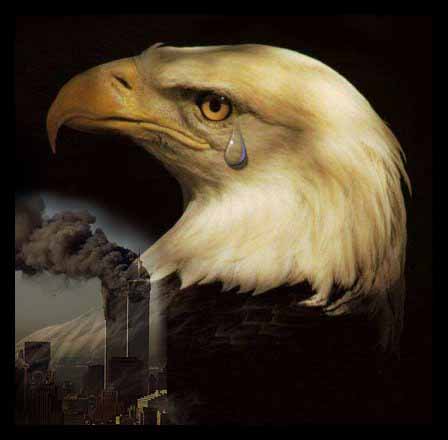
9/11, ten years later. Ten years of terror and counterterror—ten years of innocent blood—and the nightmare finally appears to be over. Osama is dead, the war is won[1], and most importantly, a new wave of resistance is sweeping the globe, a resistance that has nothing in common with the terrorists or their enemies. If the most nightmarish aspect of the last decade was its unreality—a dream-world corpse-machine—today's struggles are striking because they are real. This is the moment we have waited for: a moment without distractions, a moment ripe for revolution. And yet, perhaps there is a lesson still to be learned before we close the chapter.

At one level, at least, the terrorists did win. Nobody today thinks of exporting democracy. Not only democracy, but the whole idea of a smooth space of cultural exchange has been thrown into confusion. Without this idea, which was always utopian, it is difficult to believe in the neutrality of the market; at an intuitive level, the "economy" loses its self-evidence. Not that this implies any sort of anticapitalist groundswell. It simply generalizes the knowledge that capitalism is sustained only by continual war. One must be willing to die for the economy. And if not, one must find something else worth dying for. There are a thousand mechanisms for suppressing this knowledge—the attempted reconstruction of the soldier as a computational nexus, the surgical precision with which Osama was eliminated—but they cannot erase it. We saw it on TV.

The dirty wars of the eighties, like the terrorist attacks of the same era, were maintained at a subliminal level, as real events that could be represented or misrepresented, discussed or brushed under the rug by politicians and commentators. One saw the smiling face of Arafat or the Gipper, but not their hands. In our era—which revolves around 9/11 but began some years before—the opposite has been true. The events are their own representation. This was as true for the Seattle black bloc as it was for the embedded journalists in Afghanistan. The magic of 9/11, the sorcery that gave a symbolic act material consequences, was that it took this truth to its conclusions. By becoming a perfect image, it broke the stream of images, and thus broke the stream of events—of nonevents—as no mere event could do. The reluctant nihilist's apology for Al Qaeda, "At least they did something," reveals an unconscious understanding of this fact.

If propaganda is a visible lie pointing towards an invisible truth (if only the truth of consolidated power), pornography is a visible truth pointing towards nothing. The great propaganda event of our century was not propaganda at all. It was a pornographic nightmare that swallowed the world.

Towards the end of the decade, we active nihilists began to catch on. Against a depleted anarchism preaching "back to the community, back to the real," we radicalized the most unreal aspects of the summit protest. It began as secession from activism: do not seek affinity on the basis of political abstractions and their associated imperatives, but on the basis of shared conditions and the desires that inhabit them. Plan B was above all an organizational proposal, a proposal to establish affinity through the immediate gesture of attack. 100-200 = 1000. The exact texture and meaning of the gesture was ambiguous at first; eventually, through experimentation, it revealed itself as the pornographic. Invisibility did not mean merely evading detection, refusing communication; it meant a communication of meaninglessness. Although we did not find strangers spontaneously joining us in the street, we observed a certain resonance among worlds that seemed to make us stronger. This was the second secession: the social terrain of insurrectionary generalization became the image-world, in which spatial and temporal fragmentation mean nothing. "Shared conditions" ceased to mean physical or even social proximity; it meant the universal emptiness that our gesture revealed as act.

The difference between the terroristic strategy and our own had less to do with our squeamishness than with our rejection of professionalization. A central criterion for action: is it reproducible, does it promote or inhibit spontaneous antagonism? We articulated this tactical distinction as a matter of strategic principle, a gulf between ourselves and the theocrats. In retrospect, this was an exaggeration.

September 11 was a Hollywood production, with an executive producer and a massive corporate staff; with the advent of YouTube, Hollywood is passé. Ours is the age of participatory spectacle. Therefore, the tactical departure (or resuscitation) that we attempted was, rather than an internal development of the anarchist milieu, a selective reactivation of possibilities in adaptation to the times. A new iteration of capitalist sociability made a certain theoretical hypothesis realistic, and so we took the torch held out to us. Held out to us by terrorism. We were not the only vector of this historical transmission, but we were one of them. The result, which we witness in London as much as Athens, is a diffuse pornographic intelligence: Osama Spontex.[2]

Our own experiments eventually ran aground on the difficulties of sustaining a project that expresses itself only as emptiness. The secret thread of revolutionary commitment running from event to event did not matter at the level of our social reproduction or our material support base, for the simple reason that it was secret. We dispersed in various directions. Some formed communes, some got serious about Marx, some returned to building the anarchist movement. In every case, we took a step back from the extreme hypothesis. Without abandoning the insurrectionary strategy of rupture, we reinscribed rupture within a logic of continuity.

One might read this experience as a transitional phase in a continuing revolutionary progression. A nihilist moment was needed to clear out the vestiges of liberal, pacifist, and socialist compromise, so that a fighting movement could be reborn, a movement ready for the coming struggles. From a tactical perspective, the militant potential of the antiglobalization movement needed to be isolated and developed so that it could enter into new configurations: anti-austerity and anti-police struggles as the two fronts of tomorrow's class war. Maybe.

On the other hand, this return to bread and butter seems to resonate with a broader trend: the pacification of the image-world. When Greece burned in 2008, it was the European media, not the rioters, who talked of the "700 euro generation." The Greeks called themselves an image, an image from the future—and the generalization and success of the revolt (among Greek cities and towns, and also globally), was achieved at the level of images. In this respect, the more recent Egyptian insurrection was conservative, not only for its rapid recuperation by democratic demands and regime change, but also for its representation as secret, subliminal: everyone knows that what mattered is what happened in the street, away from the cameras; everyone knows about the media blackouts, the inaccessibility of truth. This gives credibility to an equally subliminal strategy for revolution, which limits attack to the real, to the explicable, to the truth suppressed by lies, to the antipornographic—a strategy that meshes seamlessly with the endgame of the counterterrorist decade. Namely, the return to normalcy of a system that digests and commodifies even the abnormal.[3]

The terrorisms will continue, with or without us, ever more diffuse. Certainly, the strategy of subliminal struggle will bear fruit, as surely as the activist strategies of the past. It will find its limit, though, in constructing a social body that can only normalize or exclude the spontaneous nihilism of our time. We do not want to repeat the spinelessness of our earlier excursion, nor do we want to democratize terrorism. But we are not content with this limit.


1 The continuing hostilities in Afghanistan have become yet another multilateral police action, more like Belgrade than Fallujah.

2 Mao Spontex denotes the attempt in post-68 France to elaborate the theory of revolutionary guerrilla warfare without reference to a centralized party-apparatus. Its intellectual expression is exemplified by writers like Deleuze, Foucault, and Guattari. Practically, it is supposed to have influenced (and learned from) the Italian Autonomia. The ideas seem to have affinity with the Invisible Committee's idea of the Party, which (incidentally) also references anomic violence in the terrorist manner.

3 "We didn't do it for the lulz." Anti-austerity is a political abstraction inviting a new activist imperative. It differs from the old anarchist abstraction only in presenting itself as concrete, economic, specific to the times. Anti-austerity action without an anti-austerity ideology might be another matter. Whether or not that's a good idea is another question.


Tuesday, March 30, 2010

The Dictatorship of Postfeminist Imagination

After a few dozen email conversations, grammatical and content edits by our beloved friends, and the addition of critical annotations, the IEF is proud to announce the release of The Dictatorship of Postfeminist Imagination.

from the preface:

This text is a sort of meta-critique of anarchist practices of feminism. It was provoked from this editor, generally, because of a certain absence of critical feminist theory within a milieu which adopts the assumptions and imperatives of identity politics. It was provoked specifically, because of the intelligence which the text “Is the Anarchist Man our Comrade?” and “Why She Doesn't Give a Fuck About Your Insurrection?” honed in on—of which many of us already know: the affects produced by our practices of consent, accountability, community and identity are weak. Moreover, because the forms, which mimic legal practices, that are taken up to combat internal gendered and sexualized oppression are empty of a consciousness of their historical development. Although this text is responding to particular texts and particular utterances which followed, as a sort of ethical practice, this text refuses the limitation of the milieu that speaks to itself in a particular jargon. By revealing the discourse that is taking place and staking a claim in it, this text intends to overflow its sad boundaries.

The text has multiple voices, contradictions; seams which exist as a threshold between this idea and the next. It always does. It is assembled merely as a temporary space which these bodies who are attached to worlds and their meanings communicate. Although it comes from an editing process which seeks to weave an amalgamation of intelligences and sensibilities into—at the very least—the raw intellectual materials to reveal a political position, this text is also only one such rudimentary position in a long history of feminist theoretical development. And although the voices which are put to use by this assemblage may very well scoff at certain feminist writers, it would be foolish not to examine this history.

The writers, or worlds, which inhabit this text are both infantile and full of a decade of scars. We've been experimenting with our lives, our bodes, spaces, and temporalities, and we've met similar and unique pitfalls. The theory we write is an extension of the theory we inhabit. We start from the horror that we are all potential perpetrators, because we are not sure we have developed the spoken language, or gestural vocabulary to articulate our experiences, and because we can't count past one in four—or was it one in ten? We love power, we even sometimes love to authorize, but we're terrified by the means which we must encounter our power. Because we know it's often at the expense of others.

Hating the irreversible time of daily miseries
and their repetition,

-Liam Sionnach | IEF | 2010


online reading
8.5x11 imposed for print PDF

Friday, January 29, 2010

Even Feminism Desires the Text of Power & A Few Clarifications on Key Concepts


Even feminism? Yes even feminism desires the text of power

Theory is another word for nothing left to lose. The Institute for Experimental Freedom is beyond masochistic with its bodies, murmurs and texts. We publish, print and distribute works foolishly against their future renditions. The typo or technical error pale in comparison to the shame we experience the moment our desire codified in digital mappings of vectors and typography brushes against the docile or eager appetite of whoever reads PDFs, blogs or printed zines. This shame, a sort of abjection, reverses onto us as it returns ten-fold in so many little confusions: a misinterpretation of a key term, a refusal to love our refusal to be governed by value in its textual form, an anxiety regarding one's own capacity to be acted on by the text, or feeling outside of the ironic horror we cannot help but know as a world we are attached to. Years ago, we might have simply turned deaf ears to these confusions which come in the way of half-critiques. We may have been mobilized as yet another faculty of the impoverished subversive text apparatus. We could—and have, in other incarnations—modify our words, and our practices of the text as a text of pleasure, in order to suffice as rational discourse. We could be resubjectivized by the grammar of ideology and its pathetic cry for attention; the “ideas matter” of the infant in an IWW shirt who just won't shut up about Noam Chomsky, or that of the internet forum poster who believes that he might not be such a lonely loser if everyone would just read The Coming Insurrection and talk to him about it. But, we'd prefer not to.

The Institute for Experimental Freedom practices a text of pleasure and text of power, both on paper and on the body. The CrimethInc jabs in Rolling Thunder are no misnomer. We are experimental material, and we're in it for us, our friends and the friends we have yet to meet. However, this is not to say we are not a part of a stupid milieu like everyone else, nor is it to say we are not trying to find the exit; we are, carefully.

We take the practice of thought, the practice or writing, the practice of power, the questions of “what is an artist?” “what is a writer?” “what is history?” “what are our conditions?” very seriously. And we think through a ruthless experimentation with our lives—by subjecting ourselves and our friends to high frequencies of cruelty, banality, joy, and sadness—we might stumble upon something which we would carefully put close to our hearts and share—with the milieu and with what survives it. Which is perhaps another way of saying, although ideas don't matter, the practices of a discourse require critique and provocation with which we will lovingly shock the face of any of our comrades or opponents. We have been hoping this would be reciprocated. Alas, still we sit on our knees, while our “insurrectionist” and anti-state communist peers merely stumble on their dirty-talk in front of the mirror.

Nonetheless, The Institute is a warm calculating assemblage. The comments between stories on anarchist websites which have nothing to do with it, the subtle jokes of our friends and hostiles, and the horror of our lovers' Fathers do a rudimentary violence to our corporeal topographies. From the tidy paper cuts, we excrete just a little red—enough to paint our lips or a small American flag. However, perhaps we underestimate the force of nagging slits on the skin—whether it be political or otherwise. Nothing itches more than a thousand paper cuts.

So we scratch; we'll give in a little bit. But, rest assured we have no illusions that scratching will make the itch go away. On the contrary, we're hoping to pull the wounds open just a bit more.

From these rips in our texture we'll offer these humble gifts: a series of elaborated descriptions of the terms we hold close to our hearts, which demand to be shared.


Still very much wanting the text inscribed against our unsurprisingly thick skin,

-Liam Sionnach | IEF | '10


A few clarifications on key concepts within many of the texts we publish and distribute in the way of a series of complex glosses to be irregularly posted online.

Without further adieu:


World Civil War | Gloss 1.

Civil war presupposes the modern state. In some ways, civil war can be read as both what was outside of history and then, with the development of the modern state, what became included in history. A comment like “The history of societies thus far is the history of class struggle” has a secret intelligence contained within it when we read it through our magic decoder matrix: civil war.

History and society were only really unified with the development of the modern state. The modern state in Hegel became the subject of history for his philosophy. Marx, among other Young Hegelians made this their object of critique. However, lurking bellow the surface of such idealism in Hegel was Hobbes and the concept of sovereignty. The state of nature in Hobbes was a sort of permanent potential of war of all against all. Law, enforced by the state, would create a clear divide between what was inside the law and what was outside of it; generating “civil society” (or “the civil state) on the inside, and civil war on the outside. This meant that living beings would only be included in human society (and thus, history) once they became subject to the rule of law; all manner of imperial practices come with ease. However, even in Hobbes's hypothesis, there remained a permanent problem. Law, which gives human society its so-called order, can only be enforced through means which appear indistinguishable from civil war. What Marx discreetly references is not that class struggle is the history of living beings on the planet, but that class struggle is civil war inside the gates; and is the general conditions of capitalism.

The concept of a “world” may be important in some of the ways “world civil war” is used. “The evident is not merely a matter of logic or reasoning. It attaches itself to the sensible, to worlds” (p4, Call). A world is a zone of meaning, sense—“before time, absolutely, there is sense.”(Ok, War it is Tiqqun 1) History is the reification of time as Man's time, and perhaps even the concealment of civil war. It locates a living being as subject to the sensuous praxis of generating and reproducing human society. Civil war is the free play of bios, of forms of life; life which acts in a world. “Civil,” because worlds are not limited by the boundaries or laws of nation-states and because conflict can take place in myriad of spheres, with a multiplying array of techniques. “War,” because the potential for doing violence to the most just must not be discounted, ever. On a terrain with a multiplicity of worlds, only forms of life who feel their power can act decisively.

Even in Hobbes, if there were not civil war, there would be no need for Leviathan. Leviathan wasn't a god on earth, as much as the political equivalent of someone who's afraid of the dark. The modern state therefor had as its object the warding off of an ever present civil war. It coded civil war as “evil”, and put religious apparatuses to work. We could say the modern state's practices of government had the character of a war against civil war. The development of techniques of governing which corresponded (liberalism) excluded and disciplined dangerous elements. At certain times these elements were juridically coded as “the hostis” (hostile, unknown, outside), and came in the way of invading parties, but also in the way of crime, and later, sickness.

What we call “world civil war” develops out of the modern state's failure, and each and every elaboration of civil war. Reading its history religiously, we learn that good does not triumph over evil; moreover we learn that coding the state as the hand of god reaches a threshold because its teqinches of power continuously collapse into the terrain of evil. Law cannot be enforced without the possibility of doing violence to the most just. Civil war is then the omnipresent aporia of the modern state. It cannot prevent transgression and revolt and yet it is logically demanded to develop itself to do just that.

On the other hand, we can read “world” synonymously with “global.” World civil war develops as the excess of liberal techniques of power. Capitalism generates a fracture in the being of Man's time, elaborating the fracture caused by the state. Two representations develop. On the one hand, the bourgeoisie, who managed, tuned, and attempted to master capital, and on the other hand, the proletariat, who produced all value and whose subjugated existence pulls the two into an intense conflict. Because war between nation states is governed by international law, a war between non-state actors forces both parties to develop techniques of war which are out-side the law. From the moment the first partisan disrupted the separation between solider and civilian, the development of an exceptional and irregular technique of war was set into motion. Whereas capitalism created the conditions where the state was no longer the authorizer of the political, and in fact becomes another technology for the bourgeoisie to deploy in order to neutralize intense political relationships, class struggle within capitalism returns the question of the political to forefront and cuts across national boundaries by deploying the figure of an irregular fighter in the image of the proletariat across the earth. Class struggle was the prior most intense configuration of civil war, because of its international dimensions, its ethical character which transforms any conflict into absolute enmity, and because of the proletariat's capacity to hold the threat of a self-negation: The proletariat is the class which abolish class society through its own self-abolition. However, if the proletariat who came in the way of the working class general strike, and later the diffuse irrationality of autonomous armed joy were defeated—as it was—then what would survive this condition was the representation of the bourgeoisie (at a planetary level) with a new paradigm of war without the limits of national boundaries and international law; who stood on a new terrain without a stable enemy but rather a globe of hostilities which could be intensified, if need be.

With the development of a War on Terror and permanent counter-insurgency, world civil war now returns to its initial terrifying presence. Capital, liberated from the tyranny and stupidity of bourgeois management acts as its own sovereign force and subsumes all hostile forms of life: The phase of real subsumption. The state as an appendage of capital is deployed to give meaning to the world of images by imposing the category of enemy on any one of its own excessive consequences. The ontological character of this gesture is completed once the enemy has been reintegrated into the symbolic-order, either through rehabilitation (democratization) or exclusion (a fair amount of killing).

However, perhaps the proletariat has not been defeated. Perhaps the proletariat is still the class, or vocation, which abolishes class society—and elaborates civil war. In the conditions of civil war against the bourgeoisie with the development of industrialism, the proletariat's force of negation was contingent on a strategically positioned portion of workers: the industrial working class. However with the dissolution of the both the factory and its inhabitants, and with the integration of subculture and all manner of past “revolutionary subjectivities” into the rationality of commodity production; perhaps there are different conditions and different contingencies from which a more terrible proletariat is awaiting to be revealed. In these different conditions, civil war is elaborated by an equally diffuse, almost imperceptible irregular fighter. The pure negative potential of a planetary multi-cultural petite bourgeoisie. An impure hostis humani generis. An army of sleeper cells with allegiance to no identity; with no more statist fascinations or illusions of a just society; and with no use in the economy of superfluous labor, already begins to advance civil war to its logical and redemptive conclusion: the dissolution of society, social war.